
What a fit-out contractor is actually answerable for
A building's rating is won across the whole project, but only part of it is in a fit-out contractor's hands. Knowing which part is the difference between a contractor who supports a submission and one who holds it up.
Four areas sit with us on almost every scheme:
Materials
Adhesives, sealants, paints and coatings carry limits on volatile organic compounds; timber and panel products carry questions about origin and content. Each one is evidenced with a product data sheet, not an assurance.
Construction waste
Ratings ask what proportion was kept out of landfill, and want the weighbridge tickets rather than an estimate.
Indoor air quality
How the site is managed while work is under way, and how the space is aired before anyone occupies it.
Documentation
The unglamorous half, and the one credits are lost on. A submission fails on a missing data sheet far more often than on a wrong product.
Programme
Flush-out and testing take time that has to exist in the programme rather than be found at the end of it.
Specification decisions
The largest lever, and the earliest. By the time a product is on site, its environmental cost is already fixed.
Made here, or brought from where it is made well
Joinery and bespoke furniture are manufactured at our own premises in Industrial ICAD III, Abu Dhabi. That puts the decisions about materials, offcuts and finishes with the people answerable for the room they are going into, rather than with a supplier working to a drawing.
Where a product already exists to specification, we source it instead of making it — from vetted manufacturers in Europe, the USA and Asia. That is the same judgement applied the other way: manufacturing something locally that a factory elsewhere already makes properly is not the greener answer simply because it is nearer.
Doing both means the choice is made per item, on what the specification actually needs.
The rating systems a UAE project is judged against
Most clients arrive with a system already chosen for them, and it is worth being clear which one applies before anything is specified.
In Abu Dhabi, projects are rated under Estidama's Pearl Rating System, which is mandatory rather than voluntary — government buildings must reach a minimum of 2 Pearl. LEED, and its interiors rating ID+C, is the international system, common on corporate and hospitality work. Dubai uses Al Sa'fat.
Diamond Sword has LEED specialists on staff, so where a project is pursuing LEED the requirement is handled inside the delivery team rather than by a consultant engaged for the bid. That is the difference between a rating being designed for and being reported on afterwards.
Delivered in Masdar City
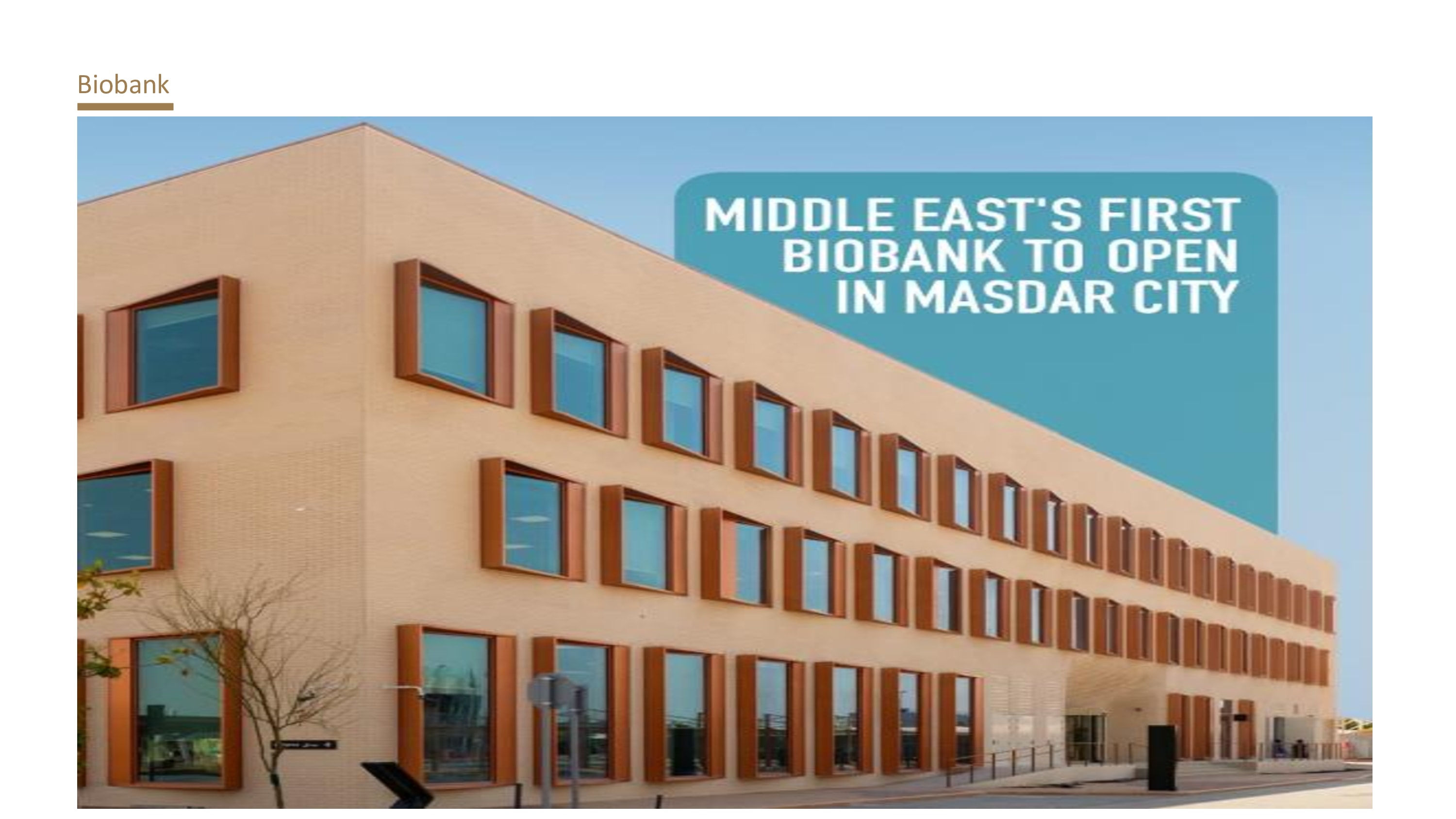
The Biobank was delivered as a design and build contract in Masdar City — laboratories, offices, meeting rooms and a café — in the district Abu Dhabi built specifically around its sustainability ambitions.
It is the kind of project where the environmental requirements are not an overlay on the brief. They are the brief.
For a project pursuing a rating
Tell us which system your project is rated under and at what level, and we will tell you plainly what we can evidence for the credits our scope touches.
That is a more useful conversation than a page can be, because the answer depends on the credit and on the product, and because a contractor who says yes to everything at this stage is the one whose submission is short of a data sheet six months later.
Delivered
Work of this kind, already handed over.

Questions
What buyers ask before they enquire.
Which rating system applies to a project in Abu Dhabi?
Estidama's Pearl Rating System, which is mandatory rather than optional — government buildings must achieve a minimum of 2 Pearl. LEED is the international alternative, common on corporate and hospitality work, and Dubai uses Al Sa'fat.
Do you have sustainability expertise in-house?
Yes. LEED specialists are on staff, so where a project is pursuing LEED the requirement sits inside the delivery team rather than with a consultant engaged for the bid and gone by handover.
Which parts of a rating is the fit-out contractor responsible for?
Principally materials, construction waste, indoor air quality and the documentation that evidences all three. Credits are lost on a missing product data sheet far more often than on a wrong product.
Does manufacturing your own joinery make a difference?
It moves the decisions about materials, offcuts and finishes to the people answerable for the finished room. Sourcing is not automatically worse: a product a factory elsewhere already makes properly is not improved by being made nearer.
Have you delivered work with sustainability requirements?
The Biobank in Masdar City was delivered as a design and build contract — laboratories, offices, meeting rooms and a café — in the district Abu Dhabi built around its sustainability ambitions.